«Sapore di sale» was written here
The definitive Italian summer song wasn't born on the Tuscan coast. It was written in Capo d'Orlando in 1963, during a month Gino Paoli hadn't planned to spend here — and which changed his mind about where he wanted to live.
Written by the family of B&B del Corso, who live in Capo d'Orlando
Almost everyone gets the place wrong
Ask where «Sapore di sale» was written and people will say Versilia, the Tuscan riviera. Northern beaches, lidos, the economic boom. It's wrong: the song was written in the summer of 1963 in Capo d'Orlando, and its author said so himself, in interviews decades apart. The lyrics name no place — they speak of salt, sun and skin — which is why everyone has filled in the sea they had in mind.
The month that wasn't planned
Paoli came to Sicily for a run of shows: he was twenty-eight and already the author of Il cielo in una stanza and Senza fine. He was meant to stay a few days. The owner of the venue persuaded him to stay on — and by his own account went as far as paying out of his own pocket for the other dates Paoli was booked to play that summer, just to keep him there. In the end he stayed a whole month.
What he did in that month
His own description, given years later, will sound familiar to anyone who has spent a summer here: there was only the beach and the Aeolian Islands. They went back and forth to the islands by motorboat, and in the evening they grilled the fish they had caught, on the beach, over embers. Nothing else. When he got home, he said, he realised he was living somewhere he didn't like — whereas Capo d'Orlando he did. The song came out of that month.
«a deserted house near a deserted beach»
The deserted house, the deserted beach
The only description Paoli ever gave of where he stayed has stayed the same for sixty years: «a deserted house near a deserted beach». He never named a street or a place. Local tradition places that beach on the shore at San Gregorio, the fishermen's village among the sea stacks — which in 1963, before the coast road was built, could only be reached on foot by the path over the hill. The Goletta path →
Then Milan, Morricone and an Argentine saxophonist
The song was born here but dressed elsewhere. Taken to Milan, the arrangement went to Ennio Morricone, who gave it its cinematic sweep; the sax solo at its centre was played by a young and unknown Argentine, Gato Barbieri, later one of the most celebrated jazz musicians in the world. The record came out in 1963 on RCA Italiana, went to the Cantagiro festival, and became the best-selling single of Paoli's entire career: the soundtrack of one summer, and then of every summer since.
Why almost nobody knows
Capo d'Orlando doesn't appear in the histories of Italian music. Thirteen thousand people, a Tyrrhenian coastline, beaches facing the Aeolians: not a place that gets cited. And Paoli never made a banner of it — he told the story when asked, with the ease of someone recalling a good summer. The result is that the most summery song in Italian music has a precise birthplace, and hardly anyone knows it.
Even the national news covered it
That the song was born here isn't a village legend: TG2, the national news on Rai Due, devoted a segment to the story of that summer of 1963 and to the archive photographs of the concert — the open-air stage, the chairs in a circle, the audience sitting on the ground. Those images say more than any description, and show a town that has since changed completely. The segment is on RAI's own channels; we shared it on our Instagram profile.
March 2026
Gino Paoli died in March 2026. He was born in Monfalcone in 1934 and lived most of his life in Genoa. Among the many places that mourned him was this one, which owed him something and was owed something in return: it had given him a month, and received a song that has lasted sixty years. The town's summer programme still devotes an evening to him. The summer calendar →
The places, today
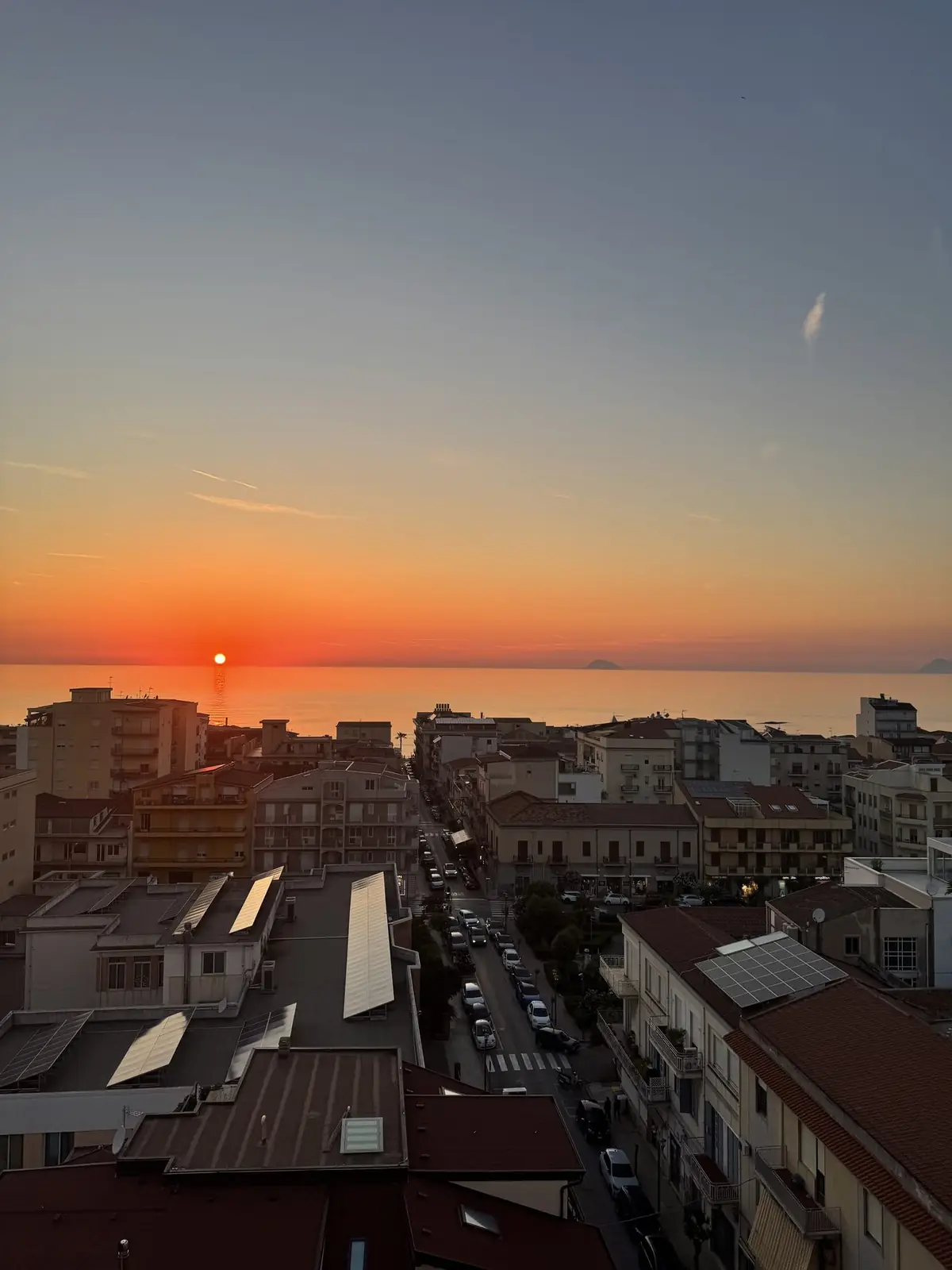
There's no plaque and no marked trail: there's the place. The village of San Gregorio, with its little square and the beach in front of the houses; the Andrea Doria seafront at sunset; and the Aeolians on the horizon, which in 1963 were reached by motorboat exactly as they are today. If you want to redo that part — go out to the islands, stop to swim, come back in the evening — it's still what we do. The day at sea → · The sunset →
Frequently asked questions
Where was «Sapore di sale» written?
In Capo d'Orlando, in the province of Messina, in the summer of 1963. Gino Paoli confirmed it himself several times, describing where he stayed as a deserted house near a deserted beach. The lyrics name no place, which is why the song is often wrongly attributed to the Tuscan coast.
When was «Sapore di sale» released?
In 1963, on RCA Italiana. It was presented at the Cantagiro festival and became the best-selling single of Gino Paoli's career.
Who arranged «Sapore di sale» and who plays the saxophone?
The arrangement is by Ennio Morricone. The central sax solo is played by the Argentine saxophonist Gato Barbieri, then young and unknown, later one of the best-known jazz musicians in the world.
Which beach in Capo d'Orlando inspired the song?
Paoli never named a precise spot: he spoke only of a deserted beach. Local tradition places it on the shore at San Gregorio, the old fishermen's village among the sea stacks.
How long did Gino Paoli stay in Capo d'Orlando?
A month, by his own account: he had come for a few evenings, but the venue owner persuaded him to extend, going as far as covering the fees for his other summer dates to keep him there.
One email a month
A calendar of what actually happens here.
Village feasts, food festivals, when the boat trips start again, what the weather does in October. One email a month, written by us, with no offers and no hurry.
Keep reading
Monte della Madonna: sanctuary, castle and lighthouse
The headland that gives the town its profile. Above, a sanctuary of 1600 built on the ruins of a castle; below, a lighthouse of 1904 flashing twice every twelve seconds. How to climb, what you see, and when to do it.
What to do in Capo d'Orlando when it rains
Two rainy days in July, ten in December. But the day it happens only ruins a holiday for people who don't know where to go: the museums, the villages, the waterfall that rain makes better, and why the sea stays cloudy after it stops.
The films shot in the Aeolian Islands
In 1949 two crews filmed simultaneously in the same archipelago, over a love affair gone wrong. Then Antonioni, Troisi, Moretti and, last year, Christopher Nolan. Where they filmed, and what you can see.
Related destinations: Capo d'Orlando, Lipari, Vulcano.
Stay in Capo d'Orlando
A base in the centre — and everything else becomes a day trip.
The port for the Aeolians is 45 minutes away, the Nebrodi right behind. Breakfast served early for dawn departures.
Direct booking, no intermediaries · See the rooftop →