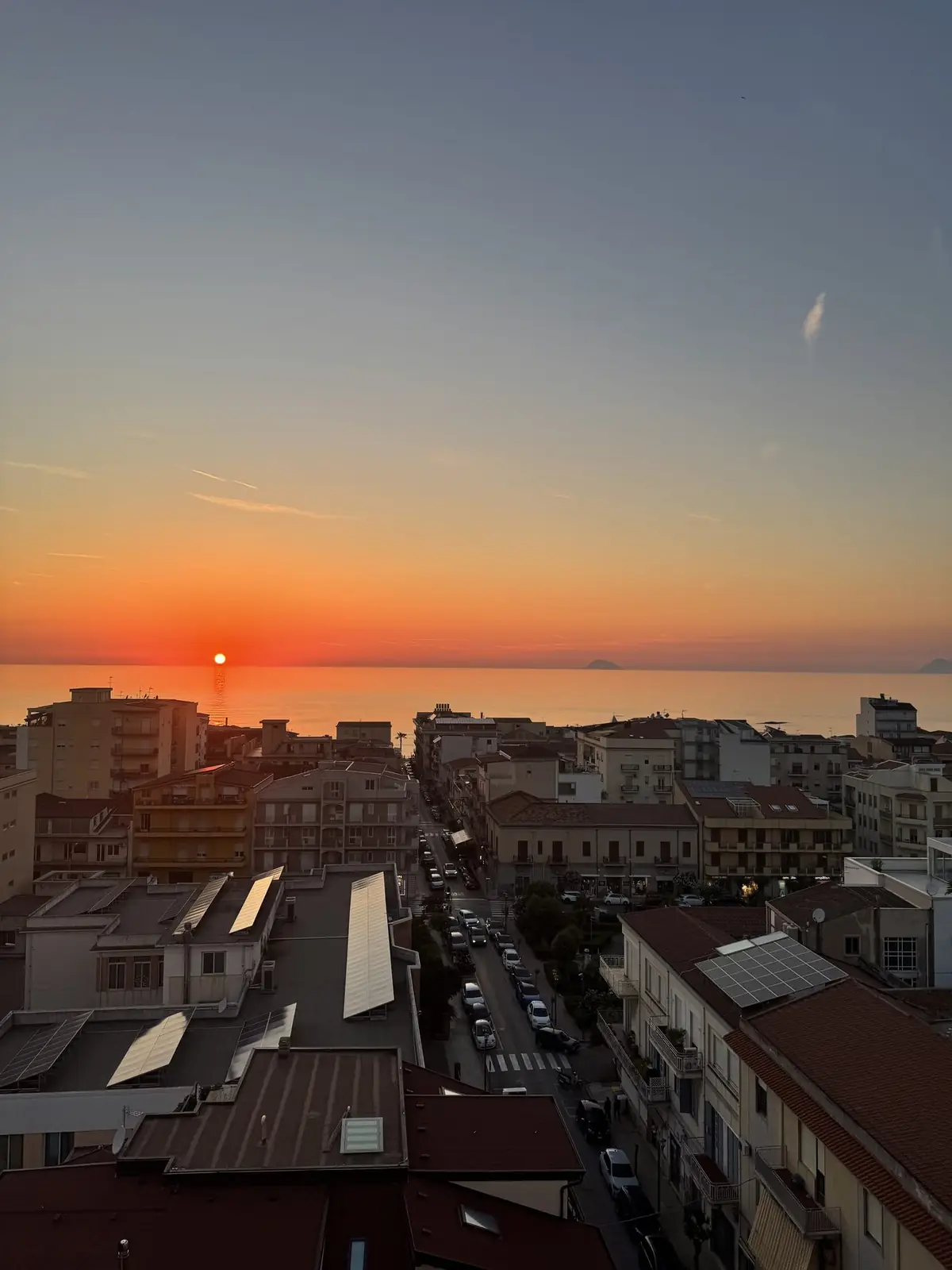
Is Capo d'Orlando worth it? The honest answer
It isn't a town of art and it isn't a postcard. It's a base: you choose it for what you can do around it, not for the old centre. It suits some people very well and others not at all — better to know beforehand.
Written by the family of B&B del Corso, who live in Capo d'Orlando
The short answer
Capo d'Orlando is worth it if you use it as a base, not as a destination. It's a modern seaside town on the Tyrrhenian, with a headland, a sanctuary, a long seafront and a lively pedestrian centre — but it isn't a medieval village and it isn't a postcard. What makes it make sense is the position: the harbour for the islands below you, the Nebrodi an hour away, Cefalù and Taormina reachable for the day, and prices that aren't those of the famous places. If you want somewhere to photograph, there are better choices. If you want somewhere to set out from, few beat its position.
Who it suits
Anyone who wants the Aeolians without sleeping on them. That's the commonest case: a base on land, day trips out, and rough-sea days rescued by the mountains. Anyone travelling with children: beaches that shelve gently, a waterfall half an hour's walk away, horses grazing free in the Nebrodi, and a town you can walk in the evening. Anyone returning to Sicily having already seen the cities of art. Anyone staying a long time — weeks or months out of season — because life here carries on in November. And anyone who walks: between the Aeolians and the Nebrodi there are more serious trails than one holiday can hold.
Who it doesn't suit, plainly
This is the part guidebooks leave out. It doesn't suit anyone after a stone village from a postcard: the centre is twentieth-century, orderly and lived-in, but it isn't Cefalù and it isn't Taormina — those are elsewhere, and reachable for the day. It doesn't suit anyone after nightlife: in summer there are concerts in the square and bars along the seafront, but the night ends early, and out of season it ends earlier still. It doesn't suit anyone expecting Caribbean water: the sea here is fine but it's the Tyrrhenian, with dark sand and pebbles, not turquoise lagoons. And it doesn't suit anyone who doesn't drive: without a car, half of what makes this base sensible — the Nebrodi, the villages, the beaches outside town — stays out of reach.
How many days you need
Two days cover the town: headland, lighthouse, seafront, a beach, an evening in the centre. It's little, and it shows. Three days is the format that works, because it adds a day in the islands and a day in the Nebrodi: with three days you understand the place. Five days allow two trips out instead of one, and therefore let you choose days by the sea rather than the calendar — which is the difference between seeing the Aeolians and hoping to. A week is the right measure: two or three islands, the Nebrodi, the inland villages and still time for the sea. Beyond a week makes sense out of season, when prices fall and the town becomes itself again. What there is to do, day by day →
What not to expect
Don't expect a monumental old centre: the modern town dates from the late nineteenth century and the real history is scattered outside it — the Roman baths, the castle on the headland, the Antiquarium. Don't expect hydrofoils below your window: for scheduled sailings the port is Milazzo, forty-five minutes by car; what leaves from here are day excursions, which are a different thing. Don't expect everything open in January: this is a real town, which is an advantage, but the tourist season has its months. And don't expect the sea to obey you: tramontana and maestrale raise the waves and stop the excursions, which is why a plan B on land is not a detail. How to read the sea here →
The season changes everything
More than anything else, when you come matters here. July and August are full: warm sea, a town alive every evening, and in exchange crowded beaches, full hydrofoils, restaurants to book and nowhere to park. September and October are the best months, and that isn't a figure of speech: the sea stays warm into mid-October, prices fall, the towns become themselves again, and the calendar tourists never see fills up — San Cono at Naso on 1 September, the Madonna del Tindari on the 7th and 8th, the Nebrodi food festivals of mushrooms, hazelnuts and chestnuts, and on 22 October the patron saint's feast, the finest day of the year in town. May and June are the other good window: everything in flower, clean trails, a sea still cool. Month by month → · The feast of 22 October →
What if another base suits you better?
It's a fair question and the answer isn't always us. Cefalù is finer to look at and much more expensive, and it's far from the Aeolians. Taormina is a different holiday: Etna, the Greek theatre, the prices you'd expect. Milazzo has the hydrofoils in its harbour and is the right choice if the trip is only islands and you want an early start every morning. Capo d'Orlando sits in between, and its advantage is breadth: islands, mountains, villages and sea within the same radius, without moving the suitcase. If your trip is narrow on one thing, another base may serve you better — and we'd rather say so first. The comparison in full, with the figures →
Frequently asked questions
Is Capo d'Orlando worth visiting?
Yes, if you use it as a base: the harbour for Aeolian day trips, the Nebrodi an hour away, the inland villages and prices well below the famous resorts. No, if you want a historic postcard village or nightlife: the centre is modern and the evening ends early. It's a real town, chosen for what you can do around it.
How many days do you need in Capo d'Orlando?
Two cover the town but leave out the reason for coming. Three is the right format, adding a day in the islands and a day in the Nebrodi. With five you can choose when to go to the Aeolians by the sea rather than the calendar. A week allows two or three islands plus mountains and villages.
Is Capo d'Orlando good for families with children?
Yes. The beaches to the east have fine sand and a gently shelving seabed, the Catafurco waterfall is a half-hour walk, horses graze freely in the Nebrodi, and the centre is walkable in the evening. Avoid with very young children: the volcano crater climbs and the firecrackers at patron saint feasts.
Do you need a car in Capo d'Orlando?
Not for the town: the centre, the seafront and the station are all walkable. For everything else, yes. Without a car the Nebrodi, the inland villages and the beaches outside town stay out of reach — and those are half the reason for choosing this base.
What is the best time to visit Capo d'Orlando?
September and October: the sea stays warm into mid-October, prices fall, the towns come back to life and the patron saint feasts and inland food festivals are concentrated then, up to the patron saint's feast on 22 October. May and June are the other good window. July and August work but are crowded.
Capo d'Orlando or Milazzo for visiting the Aeolians?
Milazzo if the trip is only islands: it has the scheduled hydrofoils in port and you can leave early every morning. Capo d'Orlando if the holiday is broader: day excursions run from here in summer, Milazzo is forty-five minutes away anyway, and on rough-sea days there are the Nebrodi and the villages instead of a wait at the harbour.
One email a month
A calendar of what actually happens here.
Village feasts, food festivals, when the boat trips start again, what the weather does in October. One email a month, written by us, with no offers and no hurry.
Keep reading
Capo d'Orlando, Cefalù, Taormina or Milazzo: which base
Four places that resemble each other only on a map. Two are destinations to see, one is a port, and one is a base. The right question isn't which is finest, but which you'd rather set out from each morning.
Sleep on the Aeolians, or on the coast?
It's the question that decides the holiday, and almost nobody asks it before booking. There is no right answer for everyone: there is a right answer for what you came to do.
Which Aeolian island to choose
Seven islands, and they are not interchangeable. Choose badly and you'll end up on Alicudi looking for a restaurant, or on Panarea in August looking for silence. For each one: who it suits, how long you need, and what not to expect.
Related destinations: Capo d'Orlando, Nebrodi Park, Lipari, Salina, Stromboli, Panarea, Vulcano.
If the answer is yes
We're on the corso, on the top floor.
Four rooms with breakfast and two apartments with kitchens, in the centre, walking distance from the sea and the station. If this page made you decide against, that's what it was written for.
Direct booking, no intermediaries · See the rooftop →