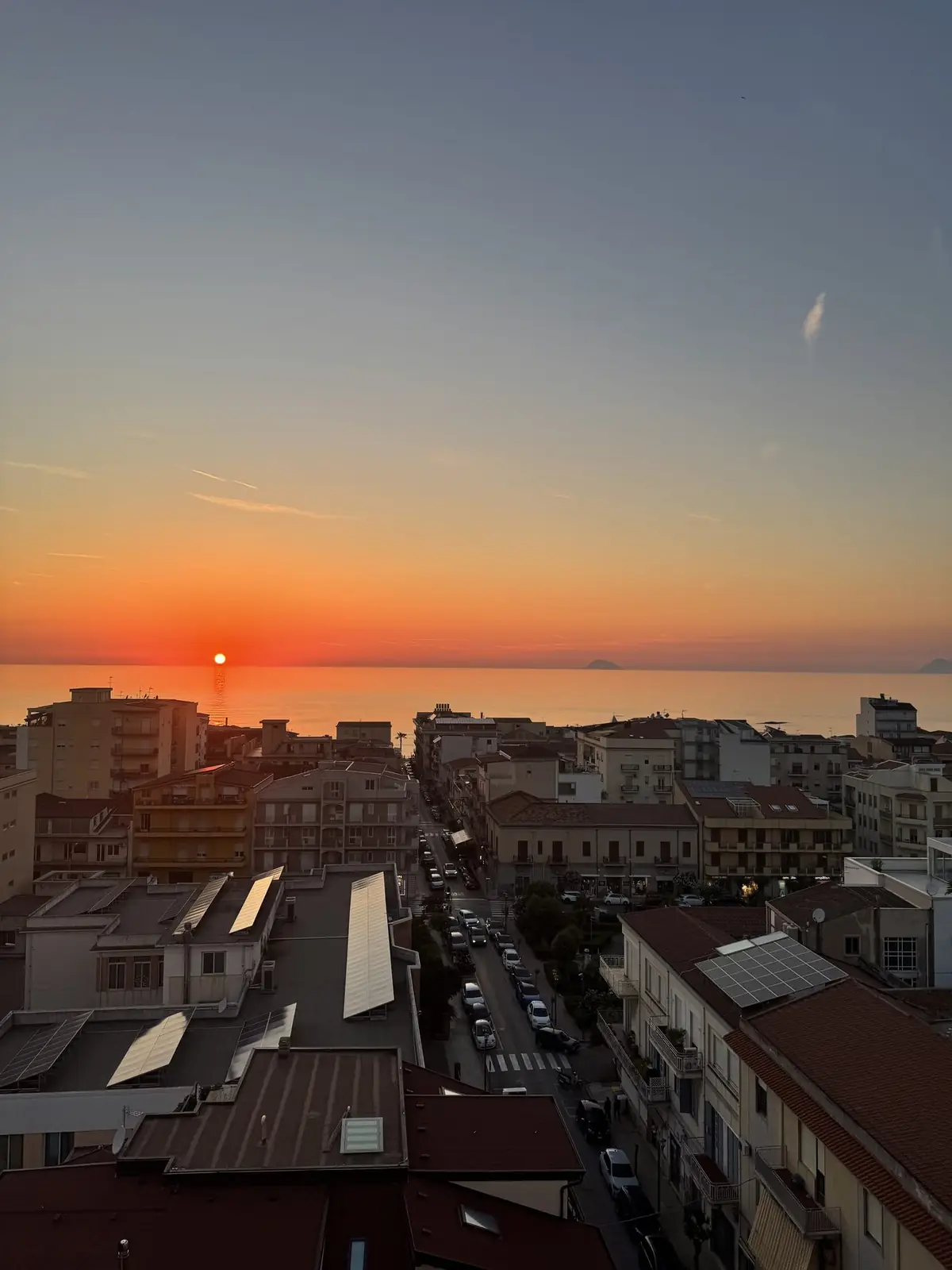
Sea, weather and webcams in Capo d'Orlando
This coast faces north, and that explains everything: when the sea gets up, when the boats don't sail, which beach shelters, and why a southerly wind flattens the water here. Plus the webcams to check before you go out.
Written by the family of B&B del Corso, who live in Capo d'Orlando
One thing explains everything: the coast faces north
It isn't a geographical detail, it's the key to every day here. Capo d'Orlando sits on the Tyrrhenian, open sea in front and the Aeolians on the horizon. Wind arriving off the sea — the tramontana and the maestrale — blows straight onto the beach and raises waves within hours. Wind arriving off the land — the scirocco, the libeccio — pushes the water offshore and flattens the sea even when it's rough elsewhere.
What gets cancelled when the sea is up
In order of fragility. Boat excursions to the Aeolians go first, because they run offshore for ten hours: above a certain wave height they don't sail, and you're told the evening before or that morning. Then the scheduled hydrofoils from Milazzo, sturdier but cancelled too in a real sea — and anyone stuck on the islands stays stuck. Ferries hold out longer. On land almost nothing changes: the Nebrodi, the villages, the sanctuary and the museums don't depend on the sea. The Aeolians in a day →
Which beach for which wind
It's the advice we give most often, and hardly anyone writes it down. With the tramontana — northerly wind, choppy water in front of the town — move eastwards, past San Gregorio towards Brolo, where the coast bends and shelters. With the scirocco, which here blows off the land, anywhere works: it's the day for the boat and for snorkelling below the headland. After a day of heavy sea the water stays cloudy for a day or two even once the wind drops: if you want clear water, wait. Every beach →
The webcams, one by one
Looking beats reading a forecast, and these are the three worth opening.
The marina camera comes first: it sits on the pontoons, runs twenty-four hours a day, refreshes every minute, and has a weather station beside it. That is the one for judging whether the harbour is calm. Capo d'Orlando Marina, weather and cam →
The beach with the Aeolians behind: good for water colour, breaking waves and how busy it is down there. The beach webcam →
The panorama from the Scafa side towards the islands, live and in high definition: the widest of the three. Scafa and the Aeolians, live →
One warning nobody gives you: the last two ask you to accept advertising cookies from a few hundred partners before they show you anything. The marina one, last time we opened it, did not.
Water temperature, month by month
The sea here warms late and cools late, which is why we always say the same thing: in September the water is warmer than in June. June is the month when the sun beats down but the sea hasn't stored heat yet; August is the peak; September stays very warm and October holds until mid-month. From November to May, swimming is for the hardy. When to come, month by month →
Forecasts: two numbers, and where to read them
For this coast you need two figures, not one. First the wind direction, which matters more than its strength: ten knots from the north raise more swell than twenty from the south. Second the wave height, in metres: under half a metre you can go anywhere, above a metre excursions start being cancelled.
The place to read both is Windy: open the waves layer, read the scale in metres at the bottom of the map, and compare the two models, ECMWF and GFS. When they agree, that is what happens; when they disagree, decide in the morning rather than the night before. The waves along this stretch of coast →
"And tomorrow?"
It is the most searched question of all, and the honest answer is that a page cannot answer it: any number written here would be stale by the time you read it. What we can tell you is what we look at the evening before. Wind direction for the next day, wave height, and the two models side by side. For Aeolian excursions the operator decides anyway, and tells you the evening before or that morning: no booking survives a real sea.
And if you are staying with us there is a shortcut faster than any forecast: ask us on WhatsApp. We watch this window every day of the year.
And if the day is a write-off
It isn't, and that's the advantage of staying on the coast rather than on an island. With a rough sea you go into the Nebrodi, where wind changes nothing; you climb to the sanctuary; you visit Villa Piccolo, which is indoors; you tour the hill villages. Anyone stuck on an island just waits. What to do when the sea won't play →
Frequently asked questions
When is the sea rough at Capo d'Orlando?
When the wind comes from the north or north-west — tramontana and maestrale — because the coast is exposed in that direction and the waves arrive from open sea. With a southerly such as the scirocco, the air blows off the land and the water stays flat.
Do Aeolian boat trips run when the sea is rough?
They are the first thing cancelled: they run offshore for ten hours or more, and above a certain wave height they don't sail. You're usually told the evening before or that morning. Scheduled hydrofoils hold out a little longer, ferries longer still.
Which beach should you choose when it's windy in Capo d'Orlando?
With the tramontana, move eastwards past San Gregorio towards Brolo, where the coast bends and shelters. With a southerly wind any beach works, and it's the best day to go out by boat.
Are there webcams in Capo d'Orlando?
Three worth opening. The marina one, on the pontoons, running twenty-four hours a day and refreshed every minute, with a weather station beside it. One on the beach, with the Aeolians behind. And a high-definition panorama from the Scafa side towards the islands. The page links to all three.
What is the sea like today in Capo d'Orlando?
It depends almost entirely on wind direction: from the north or north-west the sea gets up, from the south it stays flat. To see it right now, open the marina webcam; to know how it will be, the wave map — under half a metre you can go anywhere, above a metre excursions start being cancelled. If you are staying with us, just ask us on WhatsApp.
When is the water warmest at Capo d'Orlando?
In August and September. The sea warms slowly, so September water is warmer than June, and it stays pleasant until mid-October.
One email a month
A calendar of what actually happens here.
Village feasts, food festivals, when the boat trips start again, what the weather does in October. One email a month, written by us, with no offers and no hurry.
Keep reading
Archaeology in Capo d'Orlando: baths, castle, Antiquarium
Three sites minutes apart, and an ancient town people have argued about for five centuries. What you actually see, when it is open, and the things even the official sources do not say.
What to do in Capo d'Orlando when it rains
Two rainy days in July, ten in December. But the day it happens only ruins a holiday for people who don't know where to go: the museums, the villages, the waterfall that rain makes better, and why the sea stays cloudy after it stops.
Staying in Capo d'Orlando: by the sea or in the centre?
It's the first question people ask when booking here, and the answer is disarming: in Capo d'Orlando the seafront and the centre are the same thing, because the main street ends on the beach. What actually differs is something else — the car.
Related destinations: Capo d'Orlando.
Ask the people watching
We can tell you what tomorrow's sea will do.
Anyone can read a forecast; knowing whether that wind, on this beach, actually changes anything is another matter. People staying here ask us the evening before and plan the day around the answer — including the right day to take the boat out.
Direct booking, no intermediaries · See the rooftop →