Vulcano — Gran Cratere della Fossa
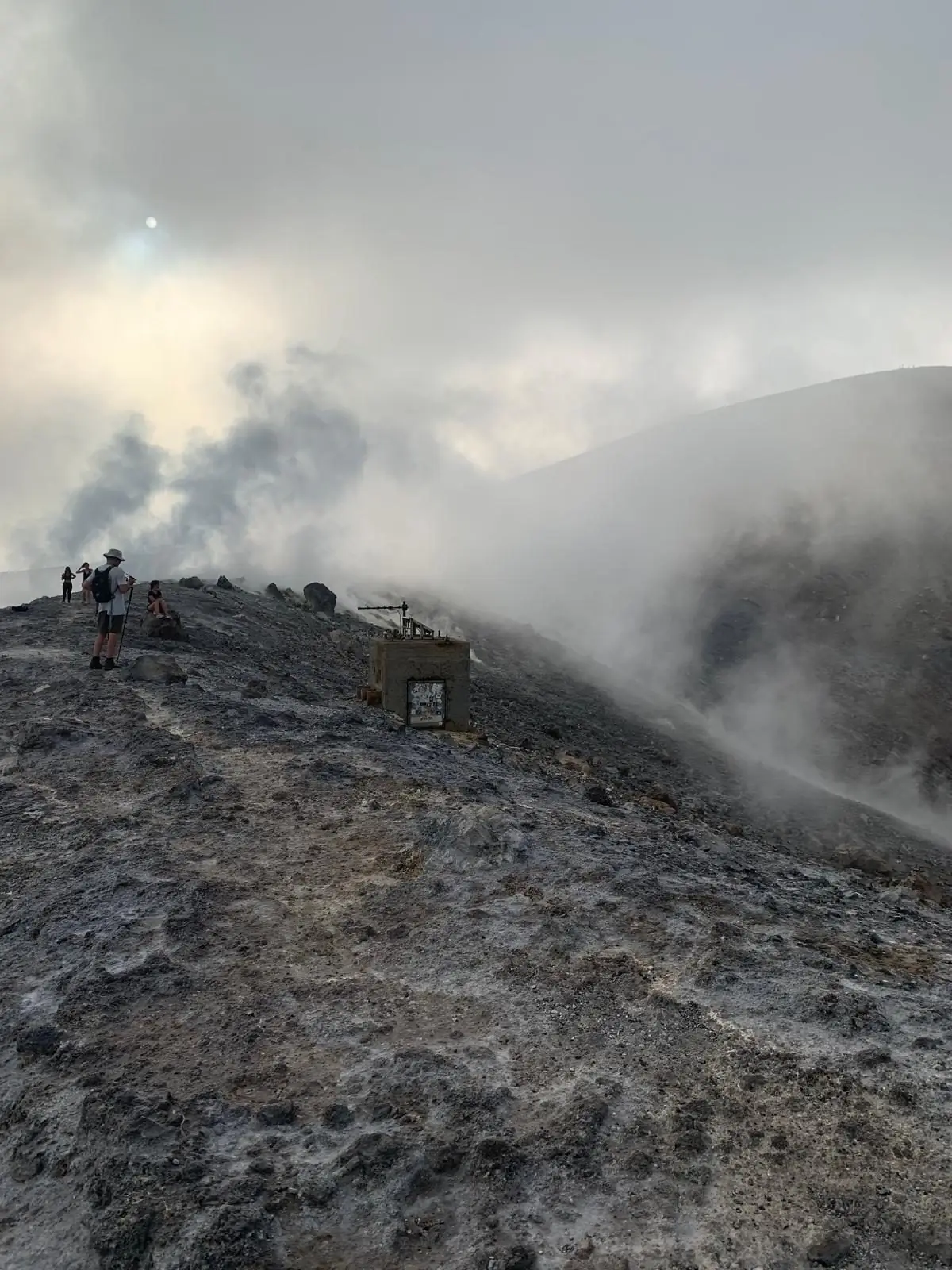
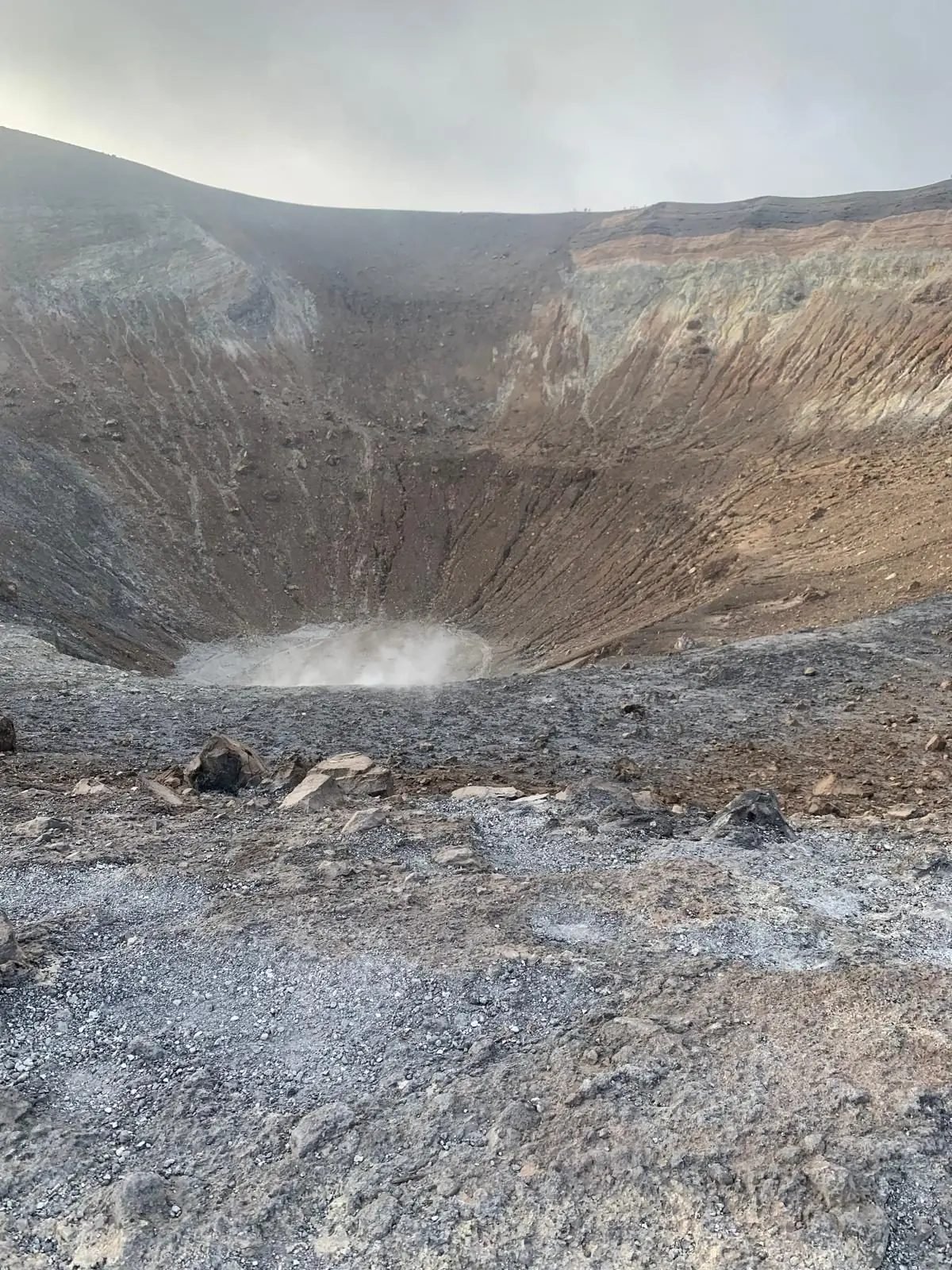
From the rim you look into a crater that genuinely smokes, sulphur-yellow fumaroles at your feet and the whole archipelago laid out to the north. You go when the traffic light says so, and you don't go alone.
- Difficulty
- Moderate
- Duration
- 2 h round trip on foot
- Elevation gain
- 391 m from Porto di Levante
- Altitude
- 391 m
- Season
- All year, when the traffic light is green
The traffic light, first of all
Access to the trail is governed by an automatic traffic-light system run by the Municipality of Lipari based on wind direction, which decides where the fumarole gases end up. Green: you climb. Red or unlit: trail closed, climbing forbidden. It's no formality — with easterly winds the smoke drifts straight across the path. And there's a precise reason for all this apparatus: since 2021 the temperature of the gases and the amounts of carbon dioxide and sulphur dioxide emitted by the crater have risen. That is why the climb was closed and then reopened under new rules.
The three rules nobody reads
Beyond the traffic light, the municipal regulation says three more things, and they're the ones people discover on the spot. You may not climb alone: you must be at least two, explicitly for rescue reasons — if something happens up there, somebody has to be able to call. You may not leave the marked route: the fumarole field and the crater floor are off-route and stay that way. Hiking footwear, water, food and a phone are required, and that isn't blog advice: it's in the regulation. The rest — sandals, flip-flops, a half-litre bottle — you see anyway, every day.
Time windows
From 1 April to 20 October the climb is allowed only from 06:30 to 10:30 and from 16:00 to 19:30: the central hours are barred for heat and gas concentration. From 21 October to 31 March the window is 07:30–16:30. The hours are a limit on presence above the restricted altitudes, not a departure time: plan your descent, not just the way up.
How long it actually takes
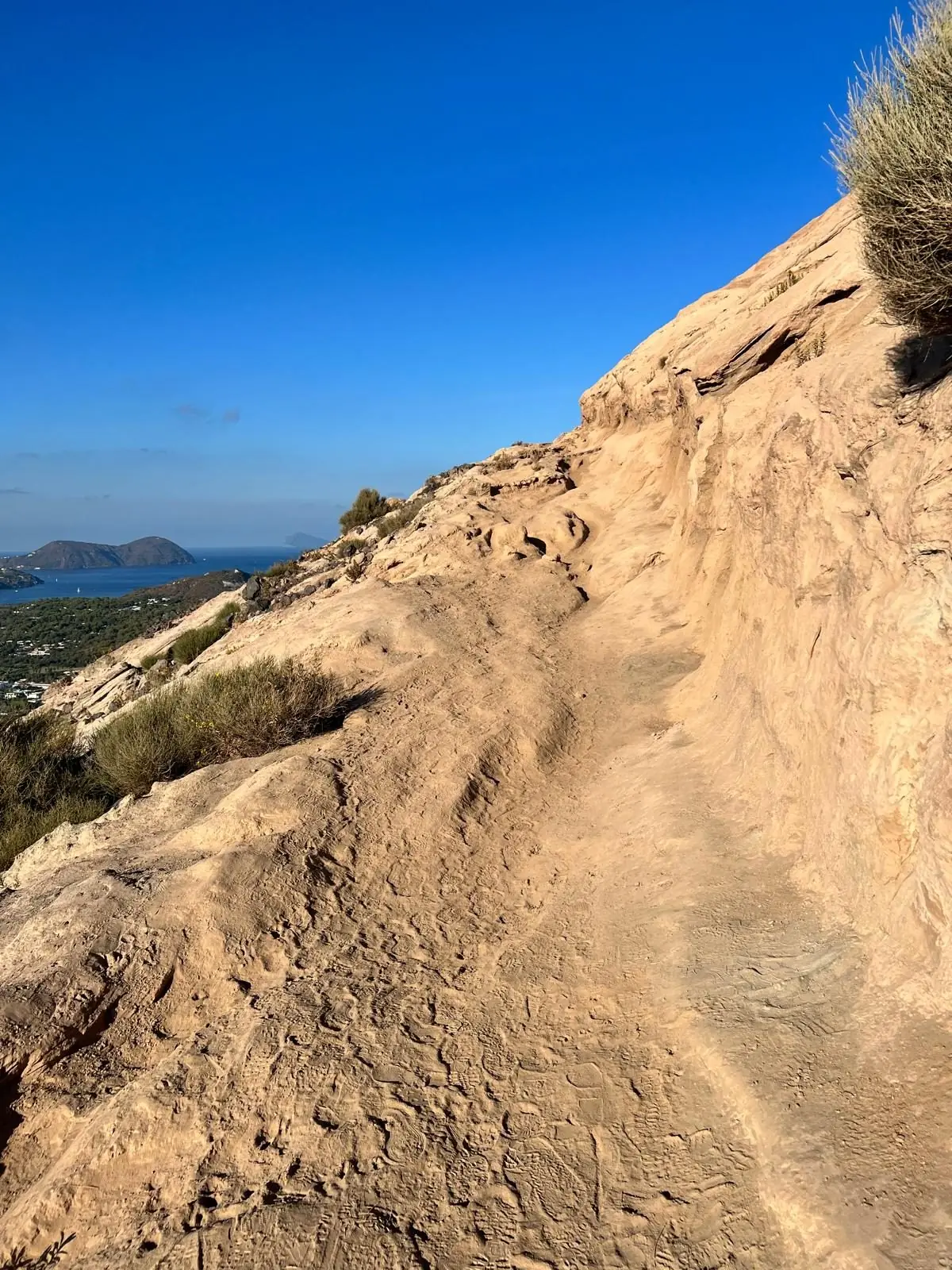
You start just outside Porto di Levante. First a stretch of dirt track, then the direct climb up the cone on pale tuff and compacted ash: steep but never exposed, and with no shade at all. These are the GPS-measured figures from one of our climbs, setting off at seven in the morning in August: 8.43 kilometres and two hours and three minutes of actual walking, averaging 4.1 km/h. That outing included a circuit of the summit area; today the permitted route is marked out and the time is shorter. For the simple there-and-back to the rim, two hours is an honest estimate.
How high the rim is
The figure you read almost everywhere, and the one we give in the panel above, is 391 metres. It should be said, though, that sources don't agree: Wikipedia puts the crater rim at 386 metres. Either way it isn't the island's summit: the highest point on Vulcano is Monte Aria, on the old volcanic edifice, at 500 metres. The Gran Cratere is lower and worth infinitely more, because it's the one that smokes.
The eruption that named a way of erupting
This is what makes the place unlike any other crater. On the night of 3 August 1888 a boom and ground tremors announced the start of an eruption that would last until March 1890: intermittent, thunderous explosions, ash clouds up to ten kilometres high, bombs and lapilli thrown as far as Lipari. It was studied and described by Giuseppe Mercalli and Orazio Silvestri, and from those observations the term «Vulcanian eruption» entered the international classification. That is not a turn of phrase: an entire type of eruptive activity, anywhere in the world, is named after this crater. The volcano has not erupted since — over a hundred and thirty years — but it goes on breathing gas, which is why there is a traffic light.
What you see from the rim
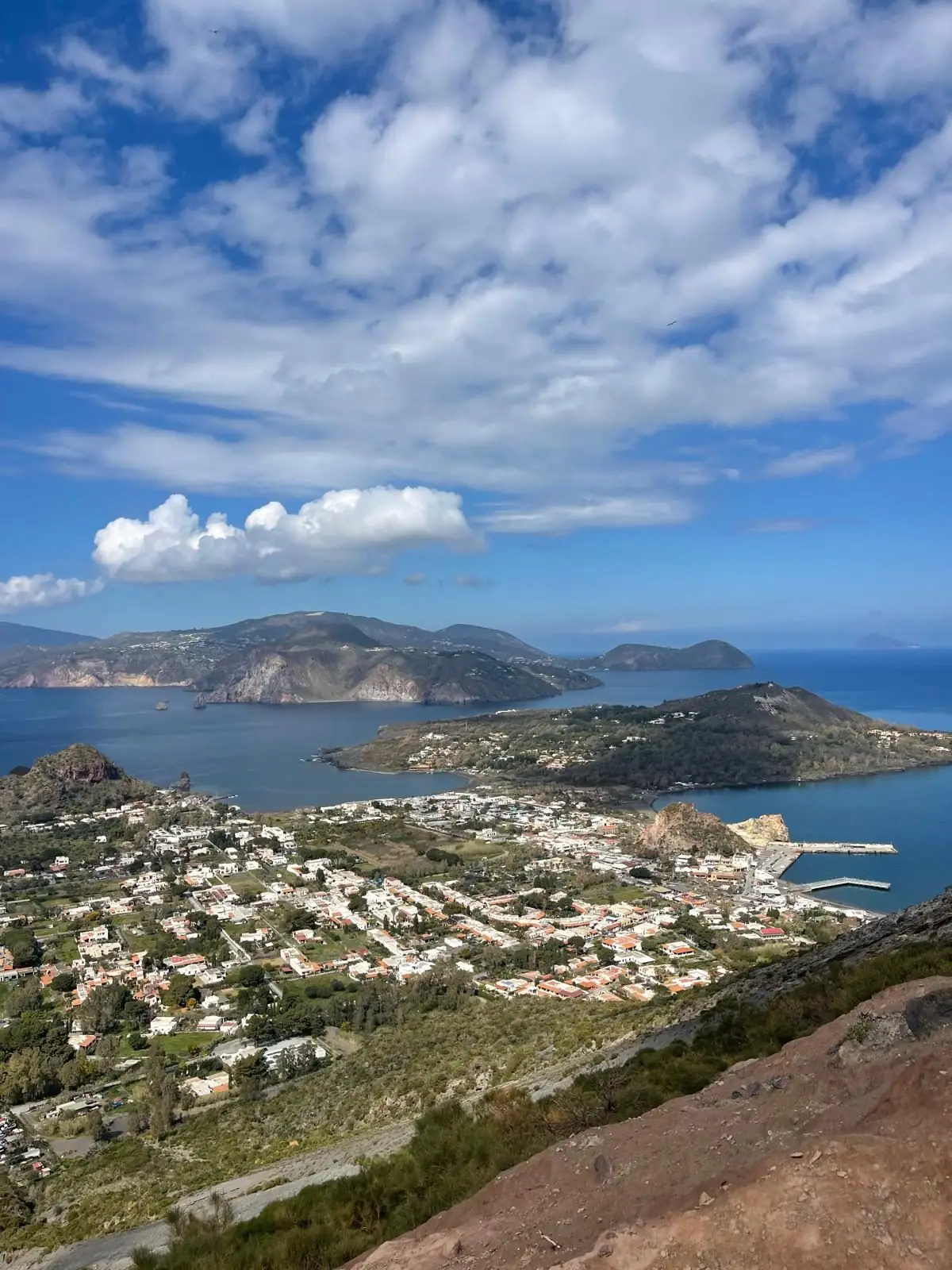
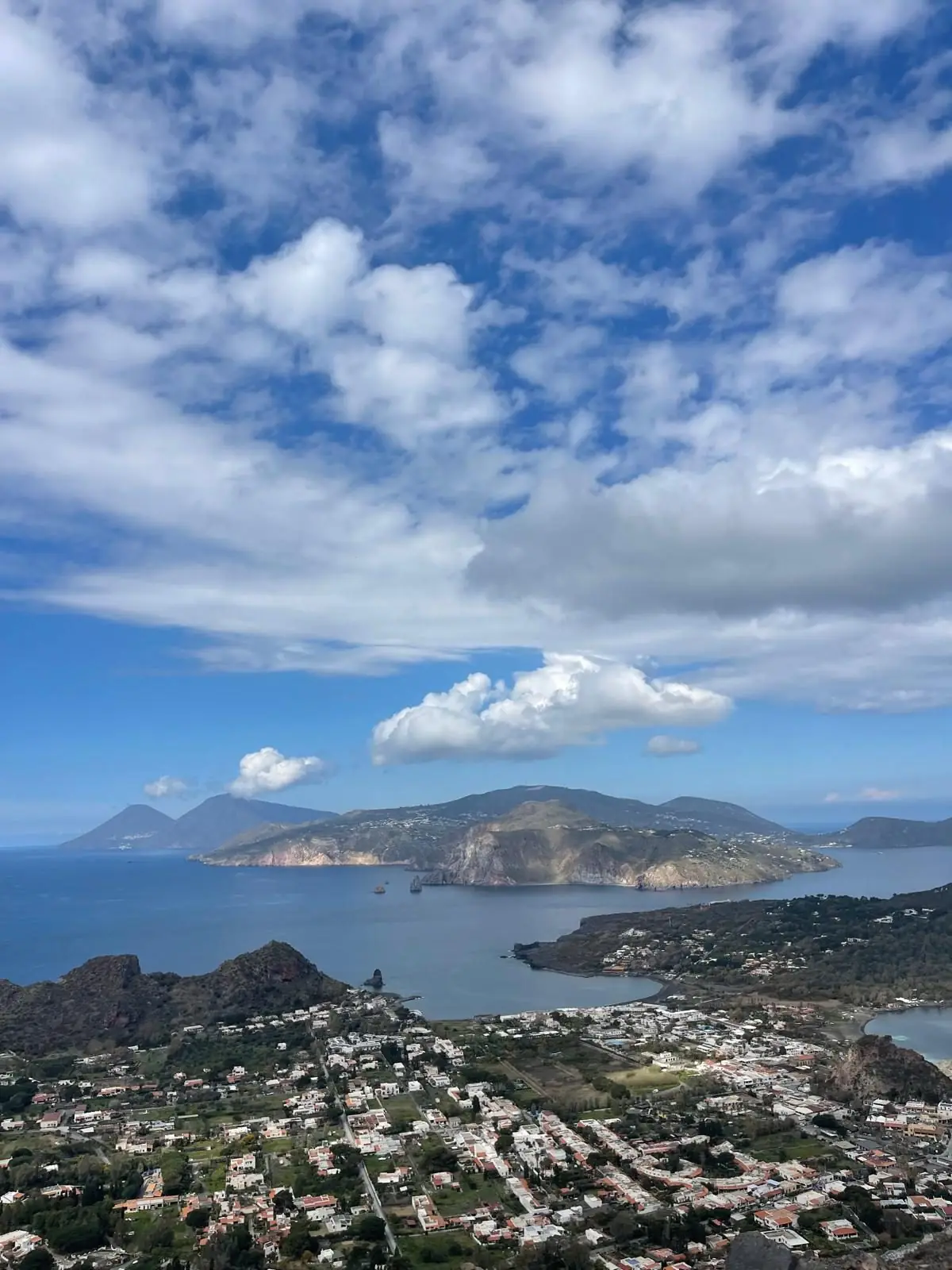
Inside, the crater itself: walls banded yellow, red and ochre, a floor that steams, and on the rim the fumarole field with its sulphur crystals and the vapour that drifts over you when the wind turns. Outside, the archipelago in a line. Below lies the village, then the isthmus and the dark hump of Vulcanello — which wasn't always there: it rose from the sea in the 2nd century BC as a separate islet, and only later did a bar of sand weld it to the mother island. Opposite, across the strait, Lipari; beyond it Salina with its twin peaks, and on clear days Filicudi and Alicudi on the horizon. The summit of Salina →
Advice
Go at dawn: clean air, raking light on the crater and no queue — and as the numbers above show, it's also the only way to do it without suffering. Avoid bringing very small children or anyone with respiratory issues: the gases are there, and a green light means they are acceptable, not that they are absent. No sandals: the ash gets everywhere and the tuff is abrasive. And bring more water than you think: there is not a scrap of shade on the cone.
Frequently asked questions
When is the Vulcano crater climb forbidden?
With a red or unlit traffic light, and in any case outside the time windows: from April to October the central hours of the day (10:30–16:00) are always barred. From 21 October to 31 March the permitted window is 07:30–16:30.
Can you climb the Vulcano crater alone?
No. The municipal regulation explicitly forbids solo climbing: you must be at least two, for reasons of immediate rescue. You must also stay on the marked route and carry hiking footwear, water, food and a phone.
How long does the Gran Cratere climb take?
About two hours there and back for the climb to the rim alone. On one of our own GPS-measured outings, starting at seven in the morning and including a circuit of the summit area, it came to 8.43 kilometres and two hours and three minutes of actual walking. Today the permitted route is marked out and the times are shorter.
How high is the Vulcano crater?
The rim of the Gran Cratere della Fossa is given almost everywhere as 391 metres, though some sources report 386. Either way it is not the island's highest point: that is Monte Aria, at 500 metres, on the old volcanic edifice.
When was Vulcano's last eruption?
Between 3 August 1888 and March 1890. It was studied by Giuseppe Mercalli and Orazio Silvestri, and those observations gave rise to the term «Vulcanian eruption», now part of the international classification. The volcano has not erupted since, but it continues to emit gas: temperature and concentrations have been monitored since 2021.
What is Vulcanello?
It is the low dark peninsula in front of the harbour: it rose from the sea as a separate islet in the 2nd century BC, and only later did a bar of sand join it to the island of Vulcano, forming the isthmus on which the village now stands.
The day before
The traffic light is checked the night before, not in the morning.
Access rules change without warning: we watch them for you and tell you over breakfast. The port is 45 minutes away.
Direct booking, no intermediaries · See the rooftop →