Stromboli — the volcano climb
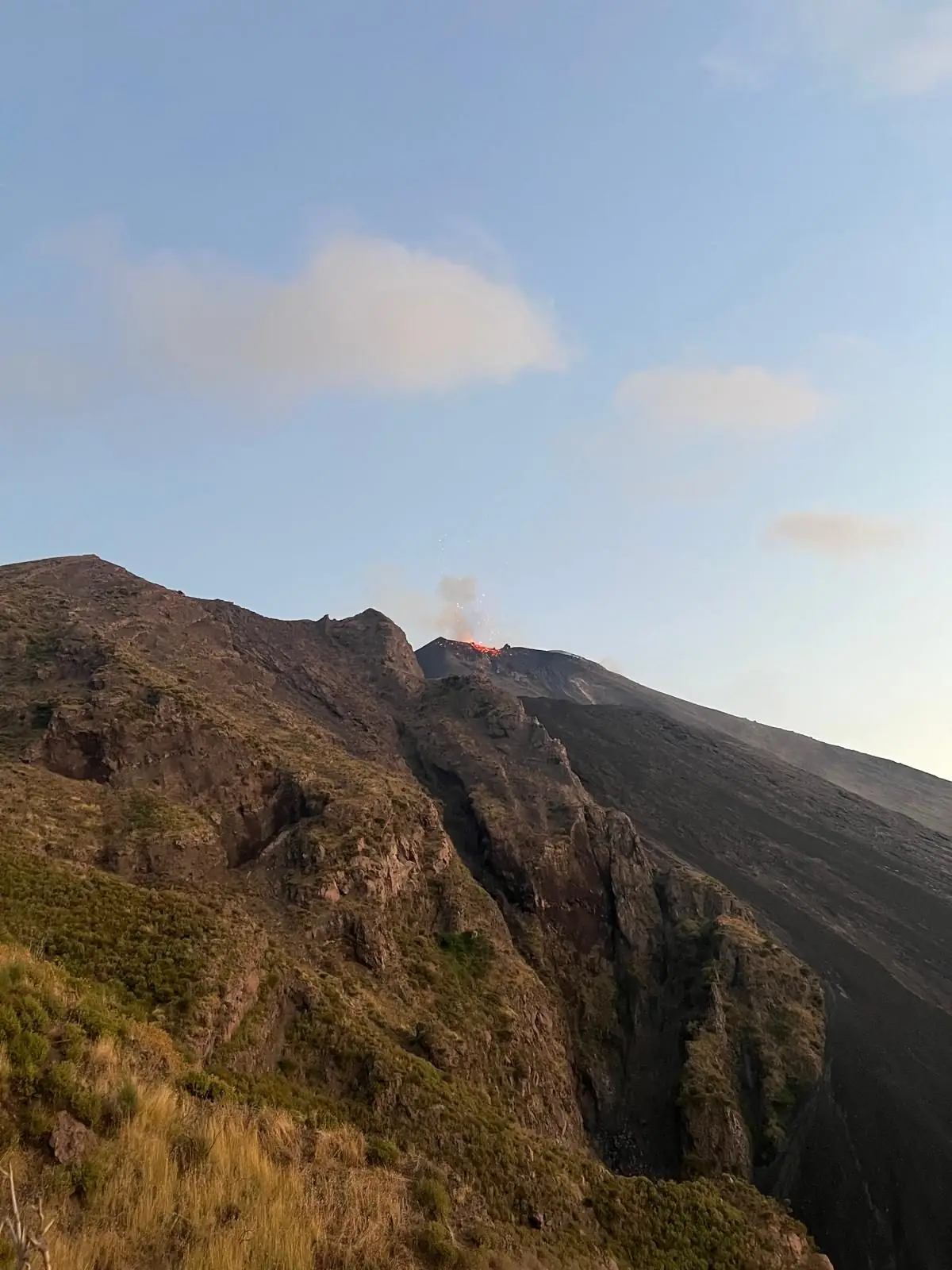
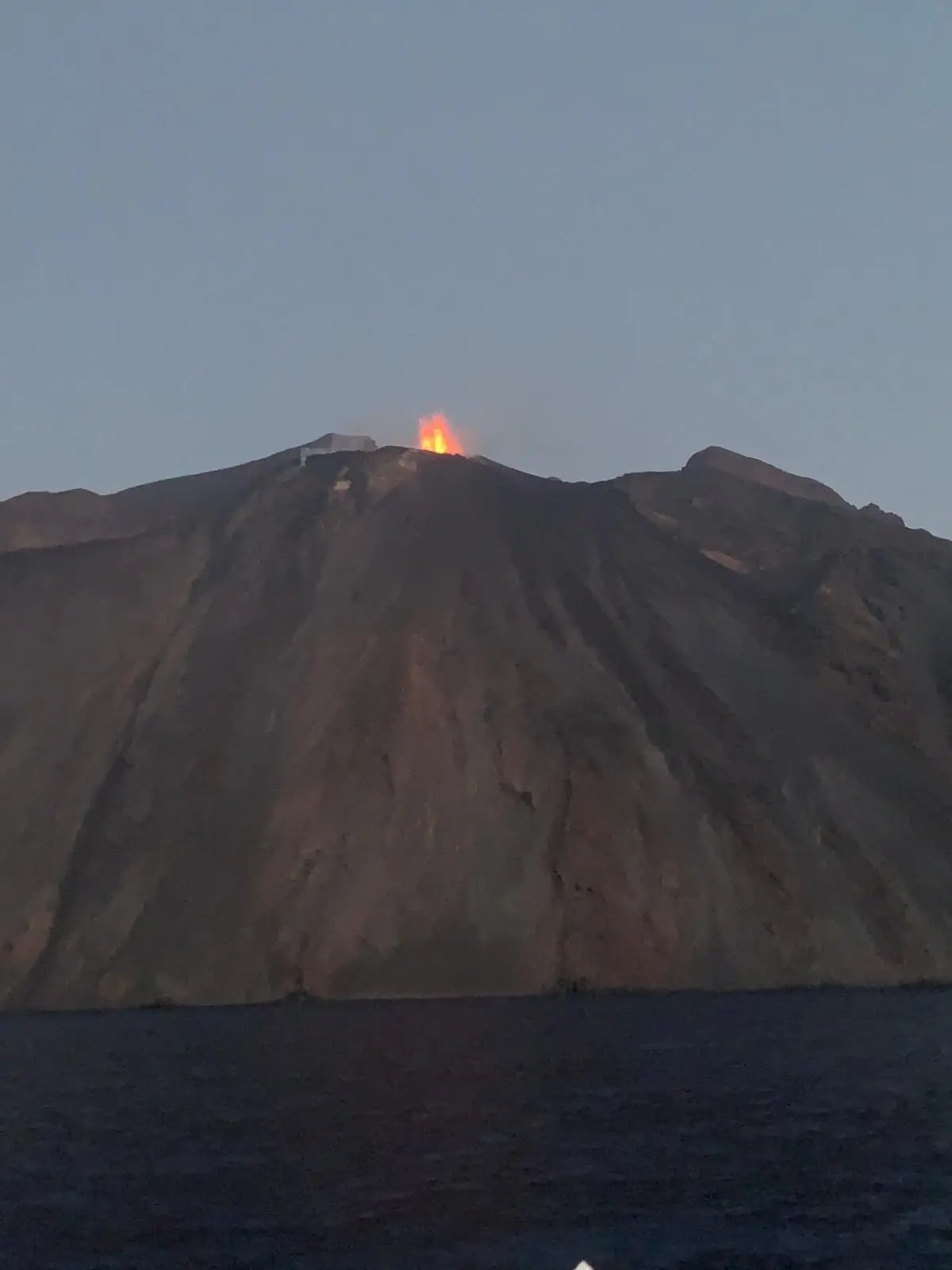
Climb in the late afternoon, sit at the viewpoint and watch the volcano work while the village lights fade below: the most memorable excursion you can make from this coast, on a volcano that has been erupting without pause for millennia, with explosions minutes apart.
- Difficulty
- Strenuous
- Duration
- 3 h walking, 5 with the guide and stops
- Elevation gain
- 495 m measured on the full outing
- Altitude
- 290 m free / 400 m guided
- Season
- March–October
How high you can go, today
The free, unguided climb reaches 290 m, along the Parroco lane and the Salvatore Di Losa mule track. From 290 to 400 m — the closest viewpoint to the craters currently authorised — you climb only with authorised alpine or volcanological guides. These limits aren't advice, they're an ordinance, and they change: the Sentiero Natura stayed closed over an unstable section near the Vallonazzo torrent and only reopened at the end of June 2025, after remedial works. Before you set off, check the Municipality of Lipari's ordinance and the INGV bulletins, not the blogs.
How it unfolds
The guided excursion lasts about five hours in total and leaves in the late afternoon, so you're at altitude as darkness falls: it's the only way to see the explosions, which by day you merely hear. The ground is volcanic sand and gravel: it slides on the descent, and light gaiters make a difference. Guides provide helmet and headlamp. You climb in single file, sit at the viewpoint for a good half hour, and come down with headlamps lit.
The numbers from our own climb
The estimates you read around are generous. These are the figures measured by GPS on our climb, which set off at 17:12 on 16 August: 10.24 kilometres, 495 metres of ascent, a little over three hours of actual walking there and back, at an average of 3.4 km/h. Add the stop at the viewpoint and the dead time of a group, and there's where the five hours come from. It's worth knowing in advance, because you get back to the village well after dark with your legs gone: dinner afterwards is not optional.
What you see, going up and at the top
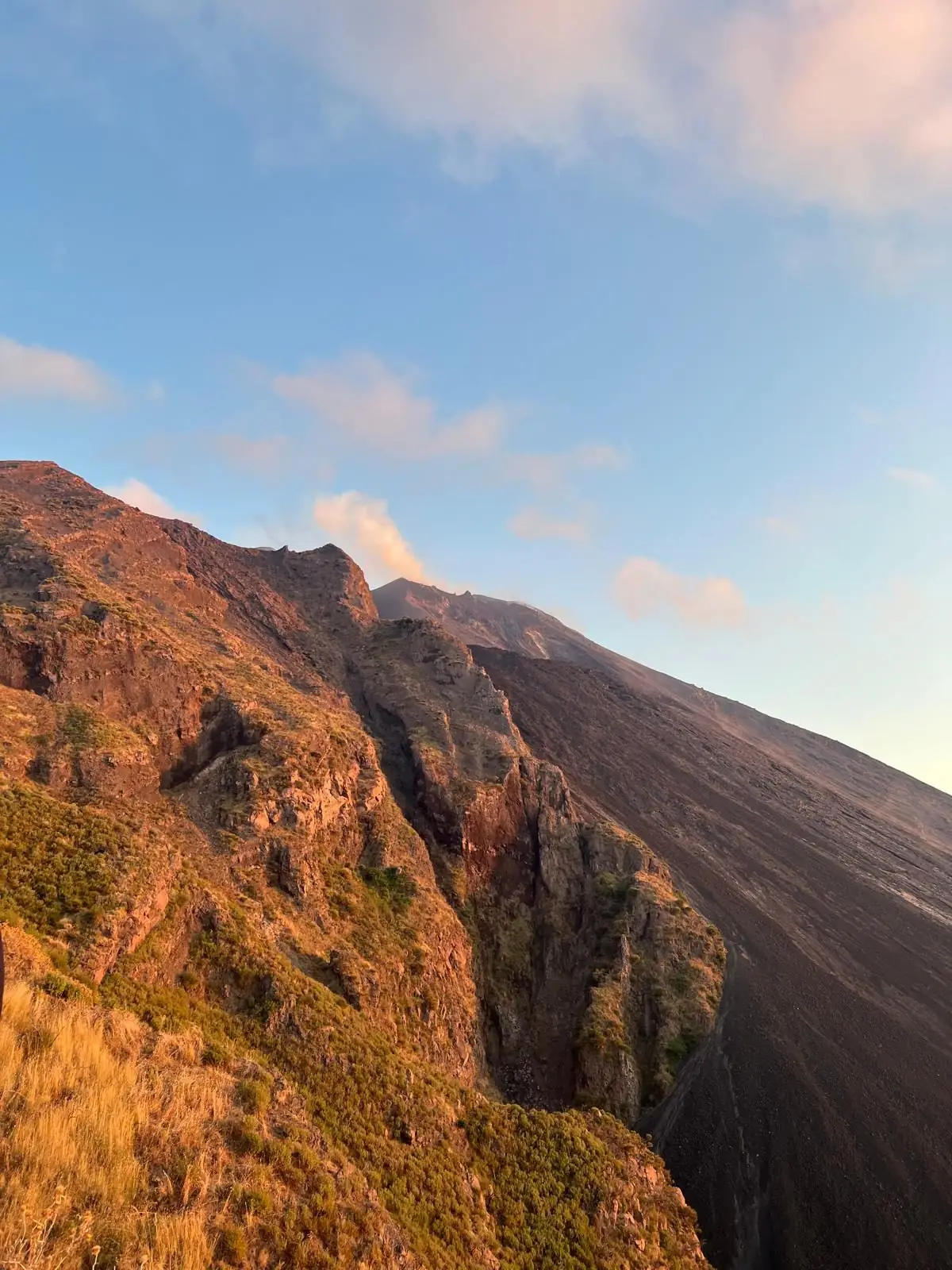
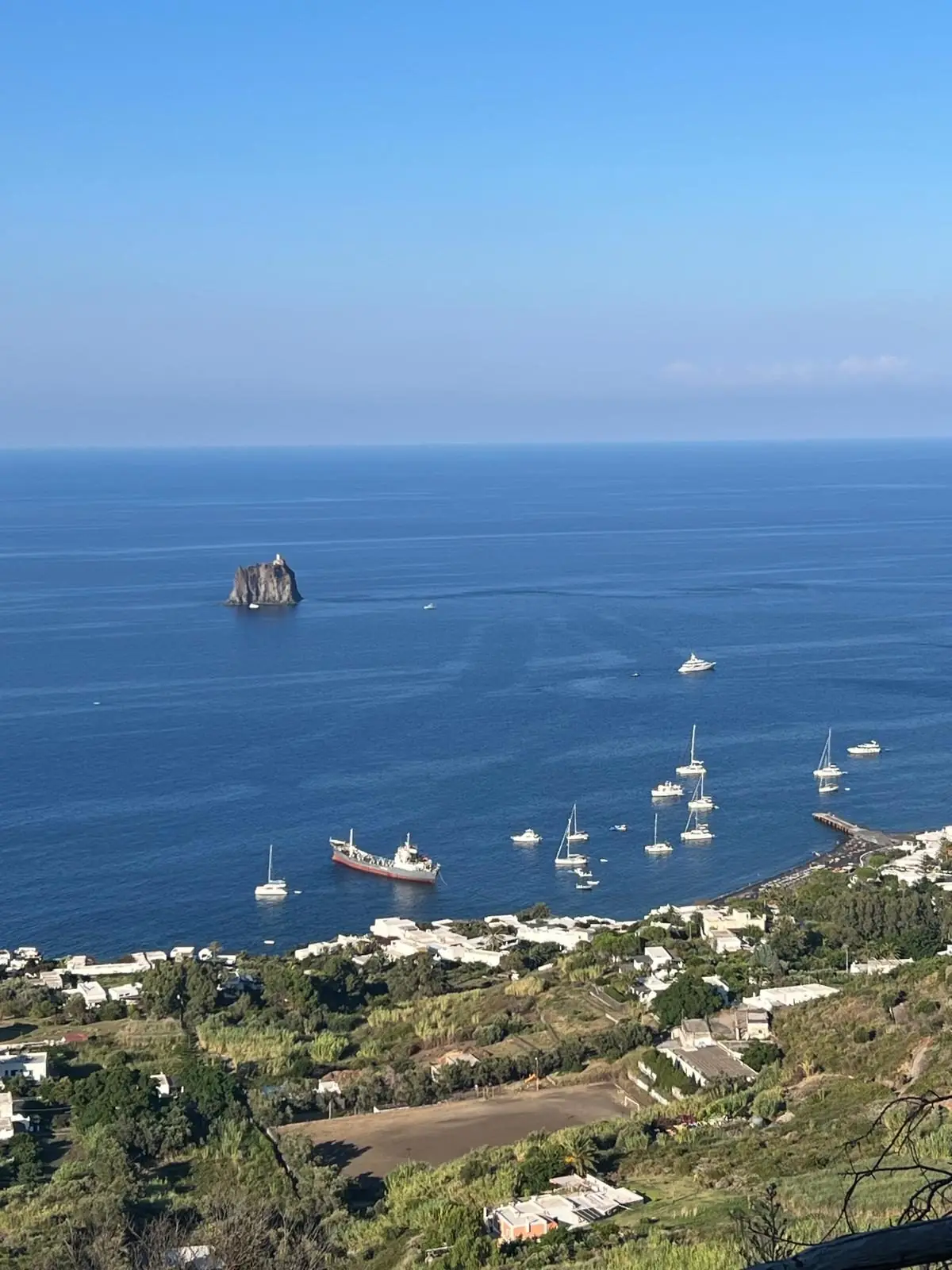
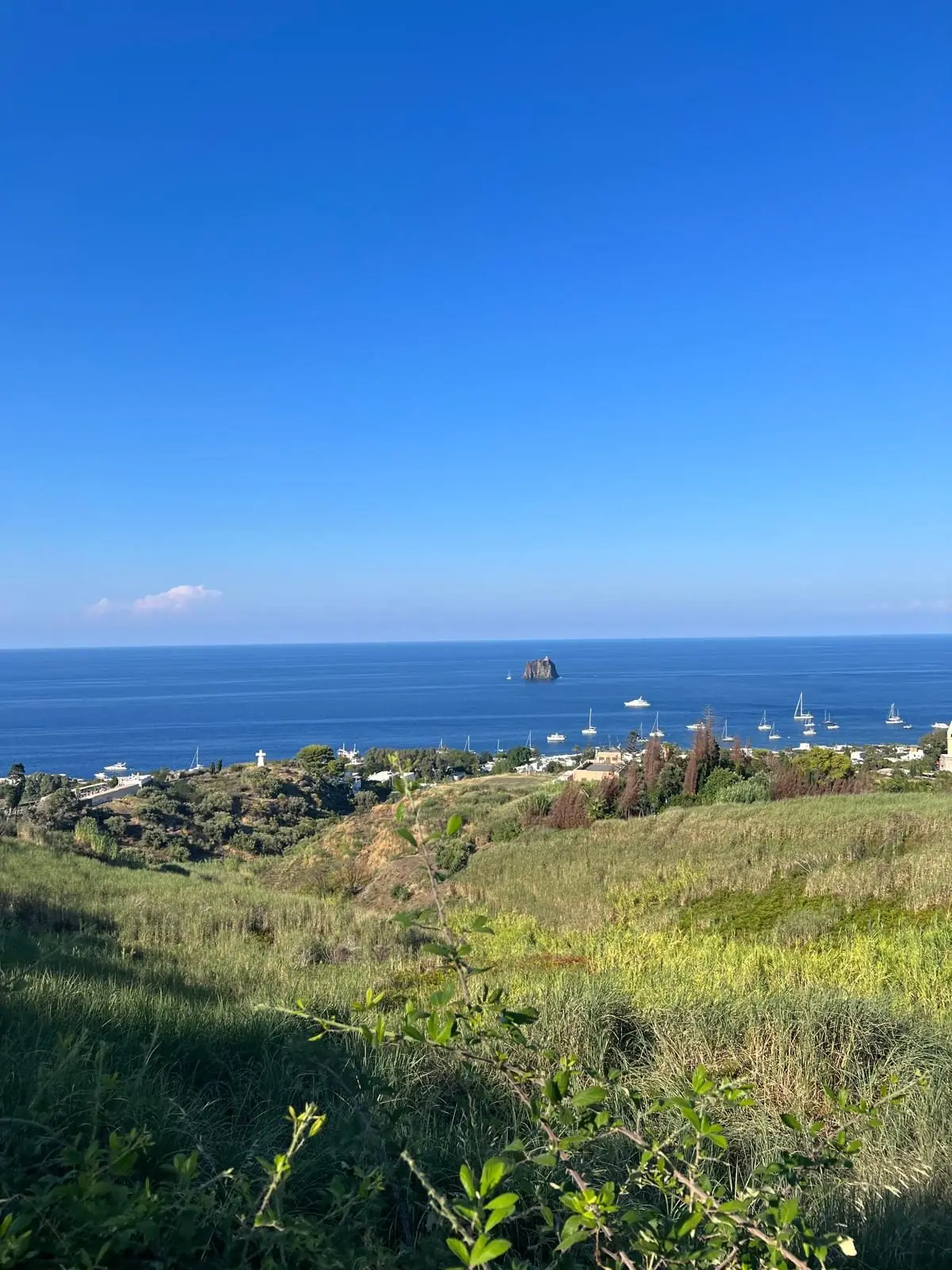
The climb earns its view twice over. Turning back, there's the white village shrinking below, the boats at anchor off Ficogrande and the rock of Strombolicchio planted in the blue. Looking ahead, from the viewpoint, there's the crater rim with the Sciara del Fuoco — the black wall of debris dropping sheer to the sea — and the explosions: a dull boom, a fountain of incandescent lapilli that rises and falls back, and the plume drifting off on the wind. It isn't a timetabled show: sometimes ten minutes pass between explosions, sometimes forty. You wait.
The rock that's older than the island
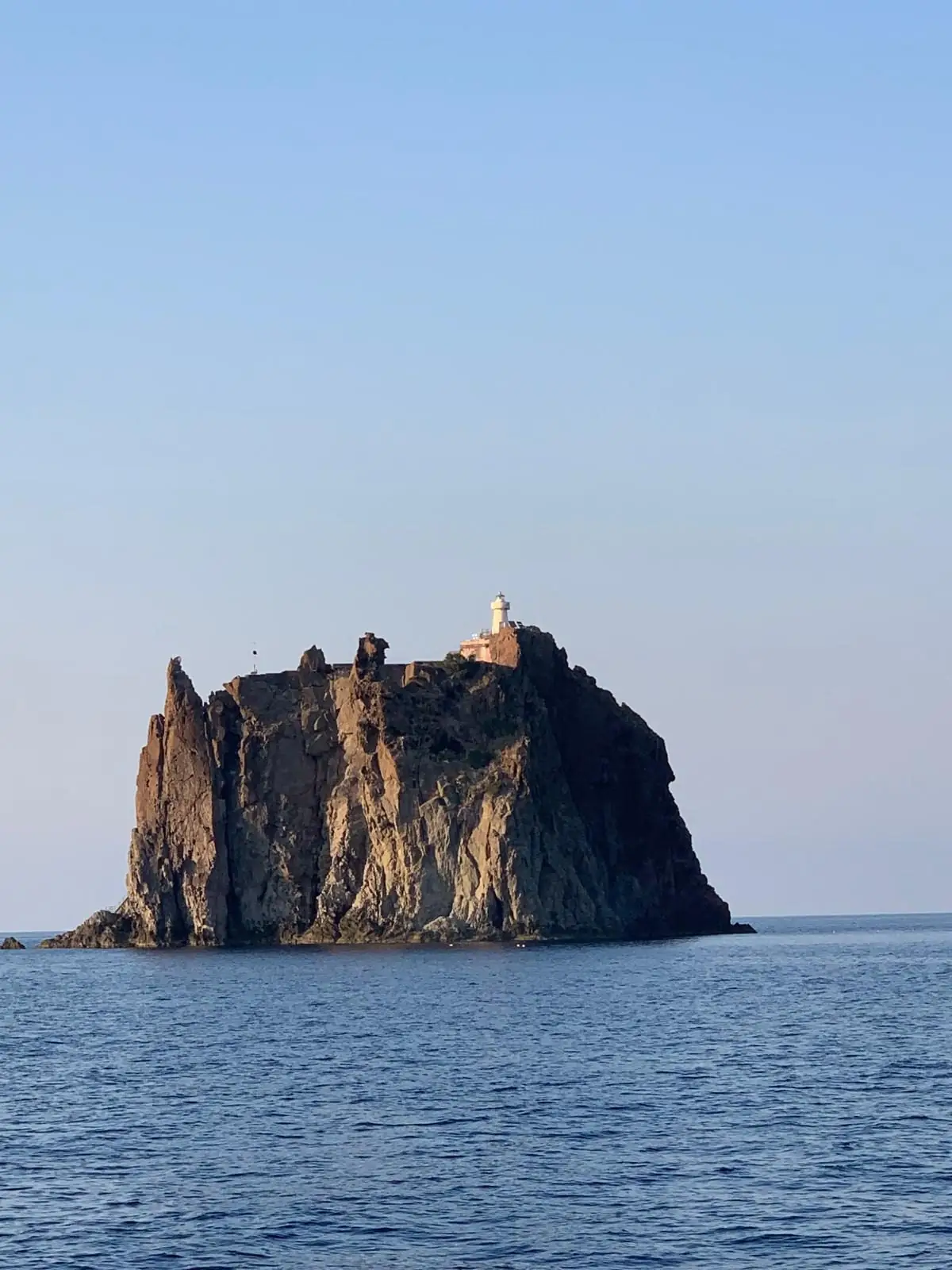
It sits in front of the village and you look at it the whole way up without knowing what it is. Strombolicchio isn't just any rock: it's a volcanic neck, the solidified conduit of an edifice far older than the one you're climbing. On top there's a lighthouse, and a staircase of a hundred and fifty-two steps cut into the rock, rising from the sea. Sources don't agree on the number: Italy's official tourism portal says a hundred and fifty-two, others speak loosely of two hundred. It's the oldest piece of this story, and it was there before all the rest.
What to bring
Hiking boots — sneakers don't hold on the sandy descent — two litres of water each, a fleece or windproof shell, because at altitude, even in August, the evening is cool and the summit is windy. A headlamp with fresh batteries: you come down in the dark. And a buff or mask for the dust on the way down, which is heavy and very fine. No sandals: the ash gets everywhere and on the descent it rises a metre off the ground.
The alternative: watch it from the sea
Not everyone can or wants to walk uphill for three hours, and there's no point pretending otherwise. The alternative exists and is nearly as powerful: the boat trips at dusk, which stop offshore of the Sciara and stay there as the dark comes up. From the water you see the explosions on the crater rim and the incandescent blocks rolling all the way down. It's the right option for anyone with children, anyone with tired knees, and anyone visiting for the day. The trips from the harbour below us →
From Capo d'Orlando
Hydrofoil to Stromboli from Milazzo port, forty-five minutes by car from Capo d'Orlando. In high season the two-day formula works best: arrive, sleep on the island, climb and return the next day — because on a day trip you see the village, not the volcano. Book your guide days ahead: the evening groups fill up, and in August they fill up at once. The island → · Stay here and climb over two days →
Frequently asked questions
Do you need a guide to climb Stromboli?
Not up to 290 metres; beyond that, yes: from 290 to 400 metres, accompaniment by authorised alpine or volcanological guides is mandatory by ordinance. The 924-metre summit has been closed since 2019.
How long does the guided excursion last?
About 5 hours in total. The actual walking, GPS-measured on one of our own climbs, is a little over three hours there and back, for 10.24 kilometres and 495 metres of ascent: the rest is the stop at the viewpoint and the pace of a group. Departure is in the late afternoon to reach altitude at dusk.
What time do you set off to climb Stromboli?
In the late afternoon, roughly between 4 and 5:30 pm depending on the season, so as to be at the viewpoint when darkness falls: that is the only moment when the explosions are really visible. You get back to the village well after dark, headlamp on.
Can you see the volcano without climbing?
Yes, on the boat trips at dusk, which stop offshore of the Sciara del Fuoco: from there you see the explosions on the crater and the incandescent blocks rolling into the sea. It's the right alternative for anyone with children, anyone not up to a three-hour walk, or anyone visiting for the day.
What is Strombolicchio?
It is the neck of a volcano far older than the present island: the solidified conduit of an edifice estimated at around 200,000 years old. It rises 56 metres above the sea a kilometre and a half offshore — it was higher, and was cut down to build the lighthouse on top — and carries a lighthouse dating from 1926, in service since 1938, reached by a staircase of a hundred and fifty-two steps cut into the rock.
The night before
You leave from Milazzo, 45 minutes from here.
Climbing Stromboli means getting back late and leaving early: that's why we serve breakfast before the usual hour.
Direct booking, no intermediaries · See the rooftop →